
Ludo Tournament Software
Build a multiplayer Ludo tournament platform with technology for player accounts, real-time gameplay, tournament management, matches, rankings, wallets and administration.
SwissDice develops configurable Ludo tournament software for gaming businesses that want to launch competitive Ludo experiences as a standalone product or as part of a broader gaming platform.

What Is Ludo Tournament Software?
Ludo tournament software provides the technology required to organize and operate multiplayer Ludo competitions through a digital gaming platform.
A complete tournament product requires more than the Ludo game interface. It needs supporting infrastructure for:

Player accounts

Multiplayer matches

Game rooms

Tournament creation

Player registration

Match assignment

Game states

Results

Rankings

Wallets

Administration

Reporting
How Does a Ludo Tournament Platform Work?
A typical tournament lifecycle can include:
Tournament Creation
Administrators can configure the tournament according to the required format, participation rules, schedule and other platform settings.
Player Registration
Players can register for available tournaments through the gaming interface according to the configured eligibility and participation requirements.
Player Assignment
The platform can assign eligible players to rooms or matches according to the selected tournament and matchmaking model.
Real-Time Gameplay
Players participate in multiplayer Ludo matches through a real-time game environment connected to the game server.
Results and Rankings
Match results can be recorded and used to determine player progression, rankings and tournament outcomes.
Tournament Completion
Once the required matches have been completed, the platform can finalize rankings and process applicable rewards or settlement according to the configured tournament model.
Ludo Tournament Platform Features
Multiplayer Gameplay
Support real-time multiplayer Ludo matches according to the selected game rules and player format.
The server can maintain the authoritative game state so connected players receive consistent match information.
Tournament Management
Create and manage tournaments with configurable:
- Participation rules
- Schedules
- Player limits
- Entry rules
- Match structures
- Prize structures
Match Management
Manage game rooms, player assignments, match states and outcomes throughout the tournament lifecycle.
Matchmaking
Assign eligible players to available matches or rooms according to the selected tournament structure.
Matchmaking logic can be designed around player capacity, tournament format and other defined requirements.
Leaderboards
Display rankings based on the selected scoring and tournament model.
Leaderboards can show player progression, standings and performance during or after a tournament.
Player Accounts
The platform can manage:
- Registration
- Authentication
- Profiles
- Player balances
- Game history
- Tournament participation
Wallet Integration
Where the business model requires supported financial transactions, wallet infrastructure can be connected for applicable entry, balance and reward flows.

Notifications
Players can receive relevant tournament information such as registration status, match availability, results and other supported notifications.
Real-Time Ludo Game Architecture
Multiplayer Ludo requires reliable communication between players and the game server.
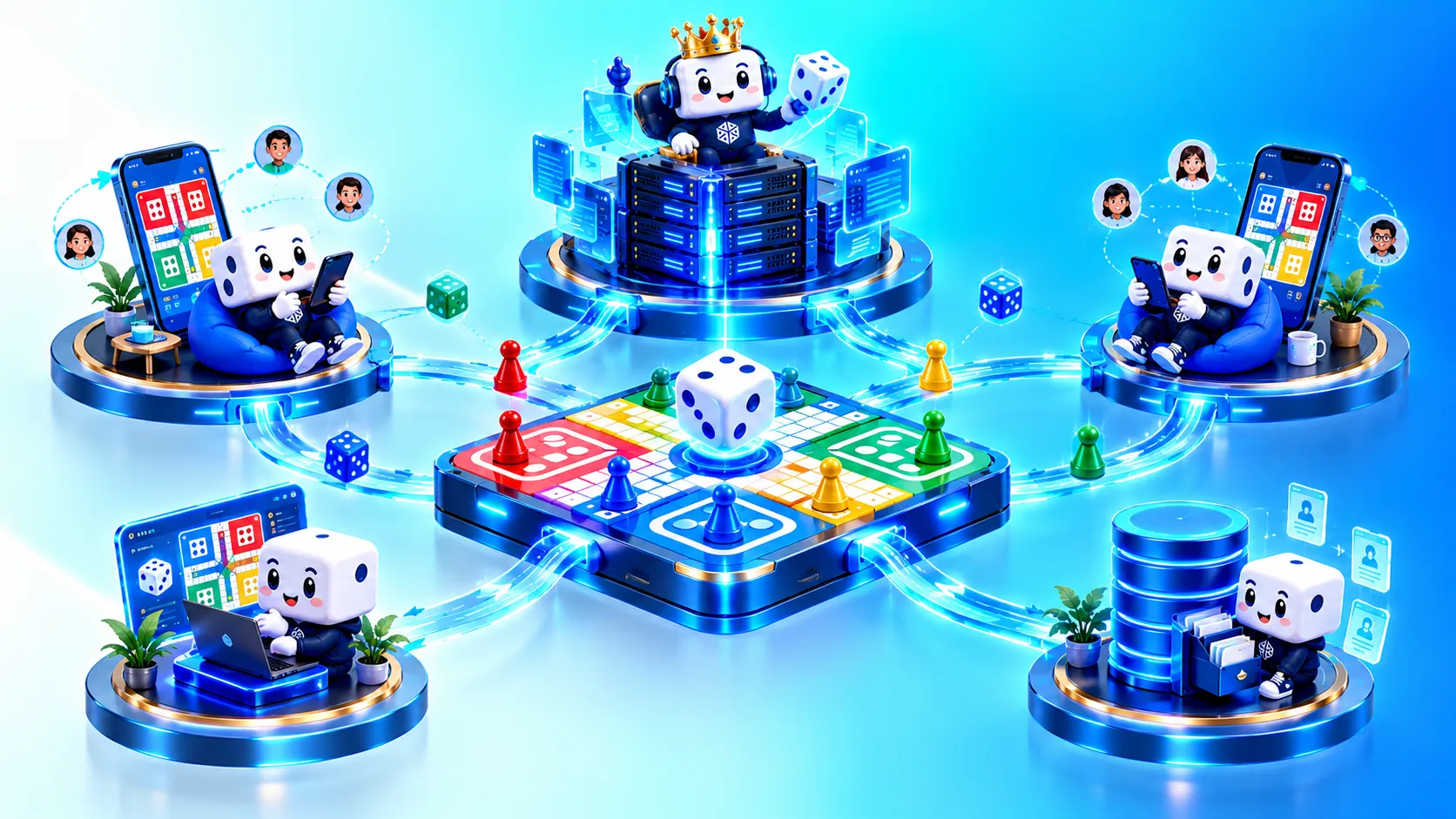

Game Client
The game client provides the player-facing interface for interacting with the Ludo match.

Game Server
The game server processes gameplay requests and maintains the authoritative state of the match.
Match State
The server maintains relevant information about player turns, board state, moves, match status and other game events.

Real-Time Communication
Real-time communication allows connected players to receive updated game-state information during the match.

Database
The supporting database can store player, tournament, match, result and other required platform data.
Ludo Tournament Formats
The platform can be configured around different tournament structures depending on the required player experience.
Knockout Tournaments
Players progress through successive rounds, with participants eliminated according to the defined tournament rules.
Scheduled Tournaments
Players register for tournaments that begin at predetermined times.
Multiplayer Rooms
Players can participate in organized multiplayer rooms according to the configured room and match structure.
Leaderboard Competitions
Players compete over a defined period, with rankings determined according to the selected scoring model.

Bracket-Based Tournaments
Participants can progress through structured brackets until the required final stage is completed.
Entry, Prize and Tournament Settlement
Tournament products may require configurable participation and settlement logic.
Free-entry tournaments
Configured entry requirements
Tournament prize structures
Winner determination

Prize allocation
Reward settlement

Tournament completion
Anti-Cheat and Fair Play
Competitive multiplayer products require controls designed to protect game integrity and maintain reliable match outcomes.
Server-Authoritative Game Logic
Core match-state decisions can be processed by the server rather than relying solely on the player device.
Secure Sessions
Player sessions and game communication can be protected through appropriate authentication and security controls.
Activity Logging
Relevant gameplay events can be recorded for monitoring, analysis and administrative review.

Suspicious-Behaviour Detection
Defined patterns or unusual activity can be flagged for further review according to the selected implementation.
Result Validation
Match outcomes can be validated through server-side game-state information and configured rules.
Administrative Review
Back-office tools can provide authorized teams with visibility into relevant player, match and tournament activity.
Ludo Tournament Administration
A tournament platform requires centralized operational controls.

Player Management
Manage player accounts, profiles, participation and relevant player activity.

Tournament Management
Create, configure, schedule, activate, pause or complete tournaments according to the required administration model.

Match Management
Monitor rooms, player assignments, match states and outcomes.

Results and Rankings
Review match results, player standings and tournament rankings.

Transactions
Where wallet functionality is implemented, administrators can monitor relevant transaction records and settlement information.

Reporting
Generate operational reports covering players, tournaments, matches, results and other required platform data.
Ludo Tournament Platform Integrations
Potential integration areas include:
A Ludo tournament platform can connect with other systems through APIs and supporting integration layers.
Player-account systems
Wallets

Payment services

Authentication systems
Reporting platforms

Notification services
Existing gaming platforms
Ludo Tournament Software for Different Businesses
Configurable tournament technology designed to support diverse business models and commercial goals.
Gaming Startups
Startups can use configurable tournament technology to introduce competitive Ludo as a new gaming product.

Gaming Operators
Existing gaming businesses can add Ludo tournaments to their wider gaming portfolio.

Casual Gaming Brands
Brands focused on multiplayer or casual gaming can use tournament functionality to introduce structured competitive experiences.

Existing Gaming Platforms
Ludo tournament functionality can be integrated into a broader gaming ecosystem through APIs and shared player, wallet and platform services.
Why Choose SwissDice for Ludo Tournament Software?
SwissDice combines gaming software development, API integration, player-management technology and real-time gaming architecture to build configurable Ludo tournament platforms.
Real-Time Multiplayer Architecture
Build the server-side infrastructure required to keep multiplayer game states synchronized.
Tournament Management
Design tournament structures around the required registration, matchmaking, progression, ranking and completion model.
Flexible Game Architecture
Configure the technology around the required Ludo game format, player capacity and tournament experience.
Wallet and Platform Integration
Connect supported wallet, player-account and gaming-platform services according to the required architecture.
Fair-Play Controls
Implement server-side gameplay, session monitoring, logging and administrative controls designed around game integrity.
Scalable B2B Technology
Build the platform around the business's expected players, tournaments, game traffic and future product requirements.