Modular & Headless iGaming Platform Development
Give your player experience room to evolve, with a clear contract for every retained and commissioned component.
Map your component boundaries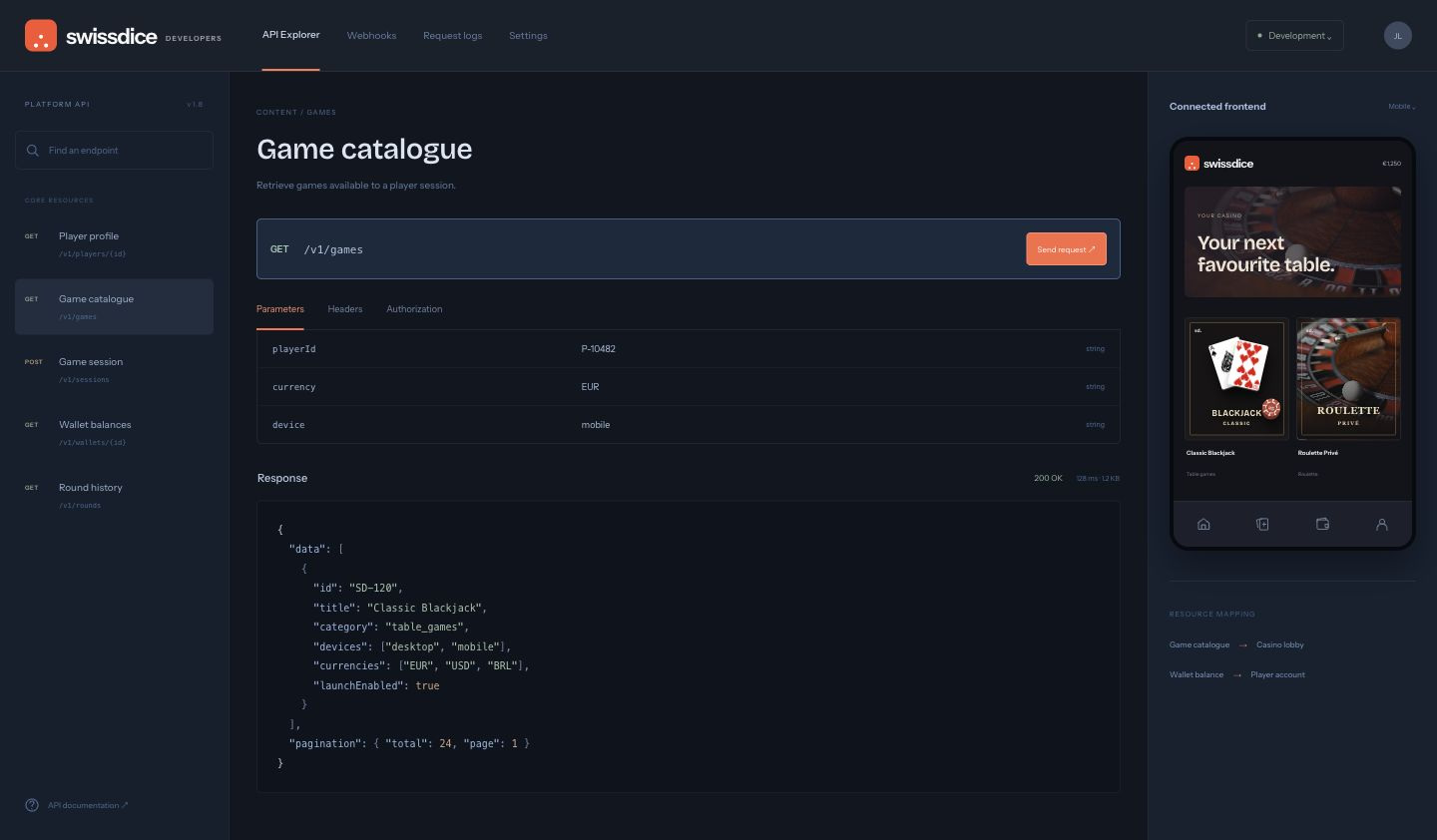
What is a headless iGaming platform?
A headless iGaming architecture separates the player interface from backend capabilities exposed through APIs. A modular architecture separates responsibilities into replaceable components with clear contracts. Neither approach removes provider dependencies; successful implementation requires authoritative account and balance ownership, compatible interfaces and operational visibility across the complete journey.
Frontend, API and platform module options
We start with the change you need: a new frontend, a payment workflow, a reporting service or a new product vertical. The existing platform APIs are assessed against that requirement. Where a supplier does not expose a necessary operation, the design must address that constraint rather than hide it behind a headless label.
The capability inventory separates public catalogue and CMS reads from authenticated account, promotion, cashier and game-session operations. It records the source of truth for each field, permitted brand and user context, supported API limits and the supplier access needed to build it. A new interface cannot implement a missing account restriction or financial operation through presentation alone.
- API capability and extension-point assessment
- Player identity and wallet authority decisions
- Supported frontend and back-office changes
What does the existing API actually expose?
- SupportedDocument the operation, access and version.
- ConstrainedIdentify missing fields or supplier limits.
- UnavailableAgree an extension or change the boundary.
An API-first casino still depends on complete account, wallet, content and player-protection journeys.
One request.
Several accountable systems.
- Player interfaceShow the accepted state.
- Account serviceCheck session and permissions.
- Product serviceApply the supported contract.
- Operational evidenceRetain linked references.
Agree correlation, timeout and recovery behavior before a component becomes independently deployable.
Keep distributed journeys coherent
A player may cross frontend, identity, wallet and provider systems in one session. We define session expiry, permission checks, duplicate requests and recoverable errors at every boundary. Monitoring connects those events using appropriate correlation identifiers, so operators can trace a failed deposit or game launch without guessing which component owns the problem.
Account restrictions and financial permissions are checked at the authoritative service before a protected action is accepted. Search indexes, reporting projections and cached lobby data can update later; their freshness rules must not turn a stale screen into permission to play or spend. Acceptance covers cross-brand access, expired sessions, delayed events and unavailable dependencies, alongside traceable recovery.
- Versioned interface and error contracts
- Event and callback handling rules
- Cross-service logging and incident ownership
Choose the modules your team needs to control.
A headless build separates the player experience from selected backend services. Agree the boundary around existing contracts, data authority and the components your team will maintain.
| Workstream | Project scope | Dependencies to confirm |
|---|---|---|
| Player frontend | Build a branded web or app experience against agreed interfaces. | Usable platform APIs, authentication and game-launch permissions. |
| Platform modules | Commission or replace defined account, content or operating components. | A named system of record and compatibility with retained services. |
| Transition and handover | Connect the modules, rehearse replacement and document ownership. | Export access, migration evidence and agreed operational responsibility. |
Replace a component without losing the journey
Inventory the retained platform interfaces
Identify the frontend, account, wallet and content components that stay in place. Review their API coverage, access rights and release constraints before selecting a module boundary.
Contract the new component boundary
Specify request and event contracts, identity ownership, failure states and version compatibility. The implementation plan separates commissioned modules from supplier-controlled behavior.
Verify cross-component journeys
Exercise account changes, game launches and money movements across the retained and replacement components. Test duplicated events and unavailable services against agreed recovery rules.
Stage the component transition
Rehearse routing, data synchronization and rollback for the selected module. Hand over interface documentation and monitoring that lets the operator identify failures across the new boundary.
Replace components without a blind cutover
A modular transition can be staged by journey, brand or capability when the retained platform allows it. Contract tests and reconciliation compare the new path to expected behavior. Cutover rules, compatibility windows and rollback triggers are agreed before traffic moves, protecting operations while the product architecture changes.
- Incremental release and compatibility plan
- Sandbox and contract test evidence
- Data ownership, export and rollback requirements
Move the boundary deliberately.
Contract tests and representative end-to-end journeys.
A scoped cohort, brand or capability where supported.
Agreed rollback, data handling and ownership.
API contracts, modules and deployment boundaries
- Retained-system capability assessment
- Headless frontend or modular service scope
- Versioned API and event contracts
- Contract and end-to-end test pack
- Observability and escalation design
- Phased cutover and handover runbook
Can we replace only the frontend?
Yes, if the retained platform exposes the required account, content, payment, promotion and responsible gaming functions through supported interfaces. We test the complete journeys before confirming that a frontend-only change is feasible.
Does headless mean faster performance?
Not automatically. Performance depends on rendering, payloads, network paths, caching and backend latency. We agree budgets and measure representative journeys; the architecture is chosen for the product need rather than a universal speed claim.
Can we migrate modules one at a time?
Often, but the data and transaction boundary matters. Wallet and account changes need particular care. We review compatibility and define how systems share or transfer authority during each phase.
Who owns the APIs?
The contract separates custom interface code from supplier APIs and licensed services. We document access rights, version policy, support obligations and export requirements so ownership is understood at each boundary.
What happens when a platform API or callback version changes?
We record supported schemas, authentication behavior, event identifiers and deprecation windows for each interface. Consumer contract tests and representative player journeys check the proposed change before cutover. Where compatible versions must coexist, the release plan specifies routing, monitoring, duplicate-event handling and rollback conditions, with updated API documentation or SDK packages where included in scope.
Is a headless casino platform the same as microservices?
No. Headless describes separating the player interface from backend capabilities. Microservices describe one way to organize backend responsibilities; a headless interface can also use a modular monolith or a supplier platform. We choose component boundaries around required changes, transaction authority and the team that will operate them, rather than requiring a particular architecture label.
How do you keep cached pages from exposing player or brand data?
The design distinguishes reusable public content from personalized responses and defines cache keys, response directives, expiry and invalidation for the selected frontend and delivery layer. Authentication, balances, restrictions and tenant permissions need their own access checks. We test signed-in, signed-out and cross-brand journeys so an old response cannot grant access or reveal another player’s information.
What determines the cost and handover of a modular platform project?
The estimate starts with the retained supplier APIs, the component being replaced and the journeys that cross that boundary. Missing operations, identity or wallet changes, data migration, frontend accessibility and ongoing interface support add different work. Acceptance includes contract tests, representative load and failure journeys, monitored release and a rehearsed rollback. Handover names source access, configuration, supplier dependencies and the owner of each incident and future API change.
Define your platform module boundaries
Describe the frontend, accounts, wallet and provider components you want to retain or replace. Include your interface constraints and release priorities so we can map ownership, dependencies and acceptance across the selected modules.
Let’s build