Reach through the browser.
Responsive routes, supported browsers and deployment ownership.
Build responsive casino frontends, sportsbook PWAs and mobile applications around the capabilities, distribution and devices your product actually needs.
Choose your channel strategy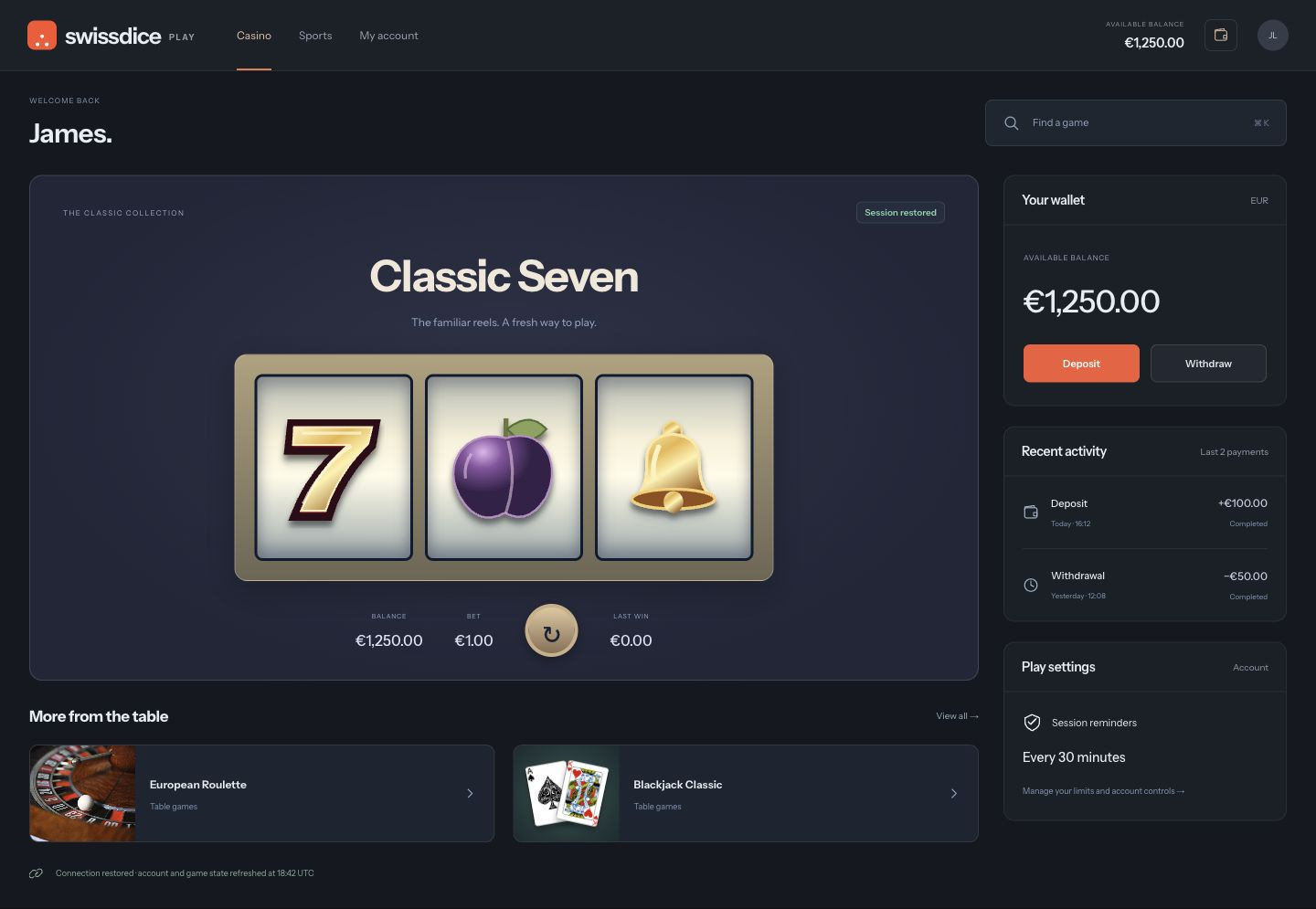
Web, mobile and PWA development implements the player-facing channels of an iGaming product. A PWA uses web technologies with selected app-like capabilities, while native applications follow platform-specific packaging and distribution. The right choice depends on permitted products, provider support, user needs and maintenance responsibilities rather than a universal preference for one framework.
A responsive website, installable PWA and native app differ in capabilities, update flow and distribution review. We evaluate the product’s authentication, content, payment and notification needs before recommending a delivery plan. App store acceptance and provider compatibility are external dependencies, and the scope records who owns accounts, signing keys and release access.
Responsive routes, supported browsers and deployment ownership.
Supported platform behavior, safe caching and update lifecycle.
Device integrations, signing, distribution and account access.
Server-confirmed account and provider status.
Retain navigation and safe content. Transaction acceptance requires server confirmation.
Refresh the session and request current status before allowing another action.
The frontend should clearly distinguish a lost connection from a rejected action. We design session refresh, duplicate-submit prevention, return links and recoverable states around backend authority. Offline caching can improve non-sensitive content availability, but it must not create the impression that a wager or payment was accepted without confirmation.
The PWA scope also defines service-worker updates, cache versions and recovery when an older client remains open. Cache rules exclude sensitive account and financial responses unless an explicit protected design permits them; logout and account switching must not expose a previous session. Updates are checked against supported API versions and interrupted game or cashier journeys. Installing a PWA or caching its interface does not make live prices, balances or transaction outcomes authoritative offline.
Performance work covers assets, rendering, network requests and interaction latency. We test realistic lobbies, tables, bet slips and account pages across the agreed browsers and device classes. Accessibility, reduced motion and readable content remain part of acceptance, with analytics configured to measure useful journeys rather than unnecessary tracking.
The decision follows user needs, platform capabilities, provider support, distribution requirements and maintenance cost. We compare these against the actual product rather than assuming an app-like interface is always best delivered natively.
Selected non-sensitive content can be cached, but transactions still require authoritative server confirmation. The interface must make disconnected states clear and avoid implying that offline actions were accepted as bets or payments.
Release coordination can be included, with the business retaining the appropriate developer accounts and permissions. Distribution approval depends on the relevant platform, product and market requirements and cannot be guaranteed by development alone.
Compatibility depends on the game providers and agreed device scope. We test representative devices and document supported behavior; a responsive lobby does not prove that every external game or live stream supports every browser.
We define the permitted destination, account context and authentication check for each link or notification. Opening a message should refresh authoritative account and transaction state; it must not silently repeat a deposit, withdrawal or bet instruction. The design covers expired sessions, changed restrictions, an unavailable destination and return from an external provider. Notification consent and preferences remain enforceable, and sensitive account or payment details should not be exposed in a lock-screen payload.
Define what can be cached, how it expires and when an updated service worker takes control. An already open app may continue on an older version, so client and API compatibility need an explicit release policy. Test an update during login, a provider handoff and a pending cashier journey, then recover current server state. Logout, account switching and cache removal are checked for sensitive-data exposure. A cached screen must not present old odds, balances or payment status as current confirmation.
Supported biometric prompts, secure credential storage, links and notifications can be included after checking the selected operating systems and identity provider. Device authentication does not replace server-side account authorization or current player restrictions. The device matrix includes unavailable capabilities, denied permissions, session expiry and recovery when a player changes devices. A responsive web interface, PWA and native build may support different capabilities; those differences are documented before implementation.
The estimate follows the selected channels, supported devices, frontend reuse, game-provider behavior, authentication, cashier handoffs, notifications and release responsibilities. Native packaging, service-worker updates, accessibility and device regression work have different maintenance needs. We plan milestones around a complete account-to-game or account-to-bet journey, interruption recovery and release evidence. Store accounts, external approval, provider access and ongoing platform updates remain named dependencies rather than assumed deliverables.
Agree native, responsive web or PWA scope with the target devices and platform constraints. Record authentication, payment and game interfaces before committing to channel-specific behavior.
Implement the selected application around authoritative APIs and clear loading, pending and recovery states. Treat weak connections, session expiry and returning users as core product journeys.
Exercise navigation, accessibility, performance and provider handoffs on the agreed device set. Deliver channel packaging and distribution dependencies with evidence from the actual application build.
Describe the web, mobile or PWA journeys you need, the devices to support and the backend interfaces available. We will compare channel requirements, session behavior, accessibility and performance before defining the frontend build.
Let’s build