Live Casino & Jackpot Network Integration
Connect supplier-hosted live tables and eligible jackpot interfaces to your lobby, account, wallet and support operation.
Define your live and jackpot interfaces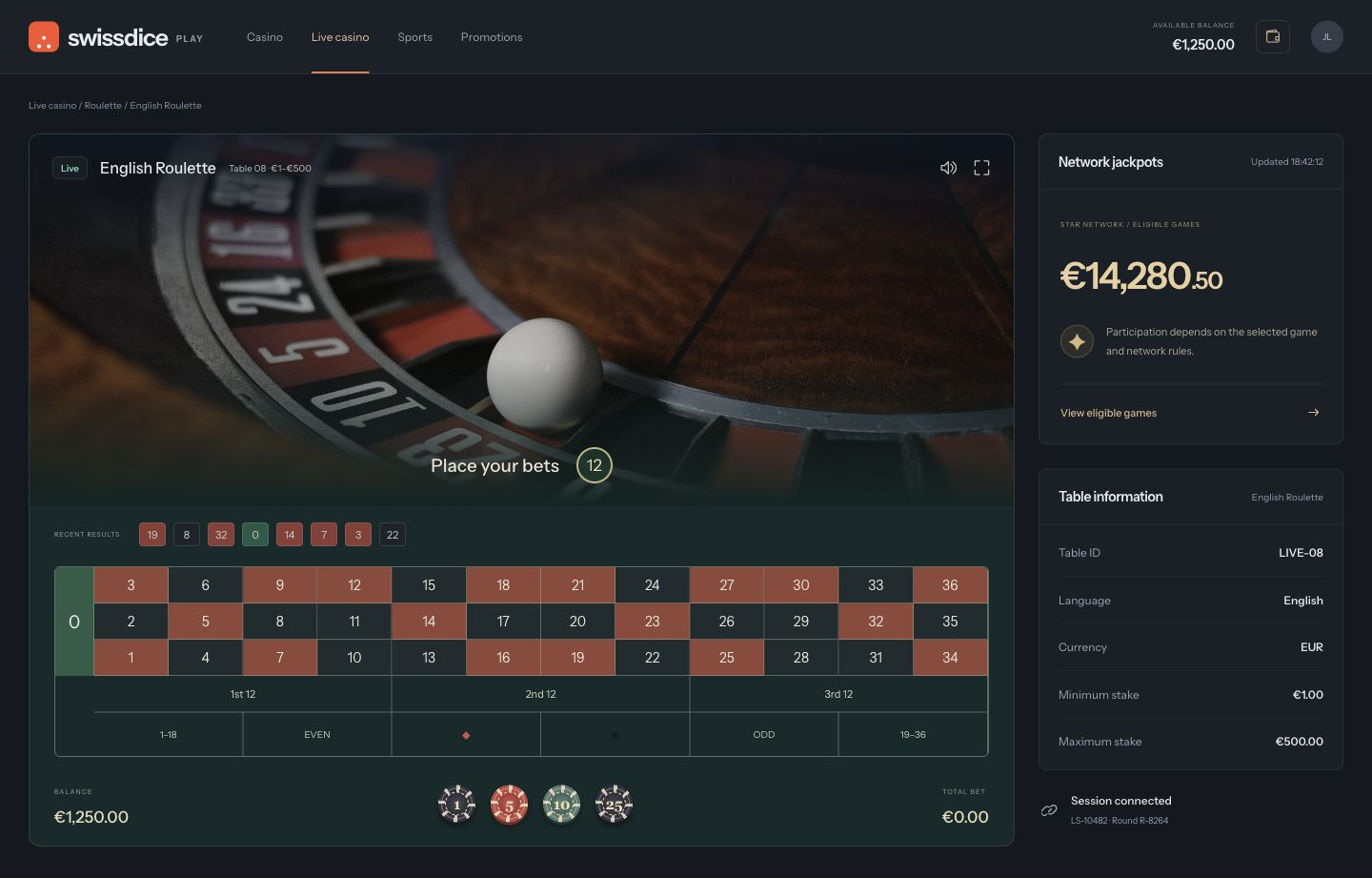
What does live casino and jackpot network integration include?
Live casino integration connects provider-hosted tables and sessions to an operator’s player platform. Jackpot network integration exchanges the eligible game, contribution and prize information specified by the supplier. Both require coordinated account, entitlement, wallet and reporting controls; a video embed alone does not establish an operating integration.
Scope live-table and jackpot interfaces as separate workstreams.
The same provider may expose several feeds, but table availability, game sessions and jackpot money follow different contracts. Choose the connections the supplier actually supports.
| Workstream | Project scope | Dependencies to confirm |
|---|---|---|
| Live table lobby | Import approved metadata and connect table launch/availability states. | Provider feed access, content rights and supported clients. |
| Game and account events | Connect session, wallet and round references for the agreed model. | Financial contracts, account restrictions and support ownership. |
| Jackpot display and accounting | Map available prize feeds, eligibility, contribution/payout events or reports. | The jackpot network rules and its actual financial interfaces. |
Display → eligibility →
contribution → award →
acknowledgement.
Keep each award tied to its original network reference. Repeated delivery must retrieve the recorded decision without creating another prize payment. Wallet acknowledgement follows the network and operator contract.
A report-only supplier model needs review and reconciliation, not an invented callback interface.
Jackpot participation needs explicit financial rules
A network jackpot can involve eligibility conditions, contribution events, prize notifications and provider-specific reconciliation. We identify which data the integration receives and which rules remain inside the network. Player-facing information should reflect the actual offer, with clear behavior when a prize value is temporarily unavailable or a game is not eligible.
Where the supplier sends financial callbacks, their identifiers and processing rules must align with the wallet ledger. Where it provides reports or aggregate values instead, the operator needs an agreed review process. We do not infer a jackpot accounting model from a visual prize counter; the supplier specification determines the supported flow.
Prize-feed timestamps, unavailable values and pool resets need explicit display rules so an old counter is not presented as a current promise. Contributions, award notifications and wallet acknowledgements use their own contract-defined identities. Repeated awards must not create repeated financial effects, while an interrupted or late live round remains traceable after the player disconnects. Acceptance also checks the network’s supported corrections and report cutoffs.
- Eligibility and contribution responsibility map
- Prize notification and display behavior
- Wallet and reporting reconciliation requirements
Live sessions, jackpot contracts and provider support questions
Discuss your requirementsDoes this include building a live casino studio?
The integration service connects supplier-hosted content. Studio design, video production, presenters and broadcast operations are different workstreams and are included only when separately agreed with the relevant specialists.
Can players use the same wallet for live and RNG games?
A shared wallet is possible when the selected providers and account platform support the agreed model. We test balances, transactions, restrictions and reporting across products before treating the player experience as unified.
Can every game participate in the same jackpot?
No universal participation rule should be assumed. Eligibility, contributions, payouts and permitted markets are defined by the jackpot supplier and product agreement. The integration displays and enforces the information available through that arrangement.
How are disputed live rounds investigated?
The support workflow connects the player account to the supplier’s session and round references. Your operating agreement determines who reviews the game evidence and makes the decision; the integration preserves the records needed to route and document that review.
What happens if a live stream stops after a wager is accepted?
Video availability and the provider’s accepted-round record are checked separately. The supplier contract determines how an interrupted round completes, is voided or is investigated; a frozen picture alone is not treated as proof of loss, refund or a new wager. The integration retains account, session, round and wallet references so later settlement and any supported correction can be reconciled, with clear status information and escalation for the player.
Can you integrate dedicated tables and different dealer languages?
We first confirm which tables, languages, currencies, stakes and operating hours the supplier agreement exposes. A dedicated branded table can require a separate studio arrangement; changing site text does not change the presenter’s language or a table’s rules. The lobby maps eligible table metadata, unavailable states and authenticated launch behavior on desktop and mobile. Studio staffing, production and content rights are defined separately from platform integration.
What determines live casino and jackpot integration cost?
Estimate the live-table catalogue and session work separately from jackpot display, participation, contribution and award interfaces. Wallet compatibility, supported interruptions, reporting access, dedicated tables and target-device testing affect the scope. Milestones validate entitled access and a traceable accepted round before staged activation and operational handover. Supplier content/network charges, studio arrangements and market approvals remain external dependencies; a prize feed alone is not a complete jackpot accounting integration.
Test table sessions, interruption and support lookup
Acceptance includes successful table launch, expired credentials, restricted accounts, unavailable tables and the supplier-supported reconnection path. The testing plan distinguishes a player’s network interruption from a provider or platform incident and checks that financial state remains traceable after the session has ended.
Support staff receive a documented lookup path using account, session and provider round references. Production readiness also covers entitlement confirmation, contact paths, monitoring and release disablement. A new provider or network can be introduced in stages, allowing your team to validate real operational behavior before extending the visible offering.
- Session and interruption test cases
- Provider reference lookup for disputes
- Staged activation and operational handover
Session mappings and jackpot participation evidence
- Provider interface and responsibility specification
- Table catalogue and lobby adapter
- Session and wallet event integration
- Jackpot display and reporting mapping
- Acceptance results and issue register
- Support reference and release runbooks
Test interruption, recovery and support lookup
Confirm provider scope
Review table metadata, session interfaces, jackpot requirements, market permissions and the responsibilities retained by the live content supplier.
Connect and validate
Implement the agreed lobby, launch, account and financial workflows, then test availability, interruption and restricted-player scenarios.
Prepare operations
Agree provider escalation, reference lookup, reporting review and production monitoring before making the content available.
Define your live table or jackpot connection
Name the live casino or jackpot provider, intended tables or prize network and existing account model. We will map session continuity, contributions or payouts, interrupted rounds and reporting to the supplier interfaces in scope.
Let’s build